Buy iqyp.com ?
We are moving the project
iqyp.com .
Are you interested in purchasing the domain
iqyp.com ?
domain@kv-gmbh.de · 0541-91531010
Buy iqyp.com ?
What are polygons?
Polygons are two-dimensional shapes that are made up of straight lines and enclosed by a set of vertices. They can have any number of sides, but must have at least three. Common examples of polygons include triangles, squares, rectangles, pentagons, hexagons, and octagons. Polygons are used in various mathematical and geometric applications, and are fundamental to understanding the properties of shapes and their relationships. **
What are triangles and polygons?
Triangles are three-sided polygons, while polygons are closed shapes with straight sides. Triangles are a specific type of polygon with three sides and three angles. Polygons can have any number of sides, as long as they are straight and the shape is closed. Both triangles and polygons are fundamental shapes in geometry and are used to study the properties of angles, sides, and area. **


Similar search terms for Polygons
Top-Angebote
Products related to Polygons:
-
JoyToys Smart Kids Learning Laptop Educational Laptop Toy For Preschool English Learning & Skill Development pinkExperience the joy of watching your child learn through play with this educational laptop toy designed to make every lesson fun and engaging. Perfect for toddlers and preschoolers, this interactive learning computer introduces letters, numbers,...34,97 $*Shipping: 0,00 $Secure redirect to the provider
-
Inspired Living Montessori Pop Up Animal Learning Box For Fine Motor & Early Skill Development Montessori Pop Up Animal Learning Box For Fine Motor & Early Skill DevelopmentTurn playtime into a joyful learning experience with this engaging Montessori toy designed to spark curiosity and build essential skills. Created for toddlers and young children, this interactive pop up animal toy combines fun surprises with...23,97 $*Shipping: 0,00 $Secure redirect to the provider
-
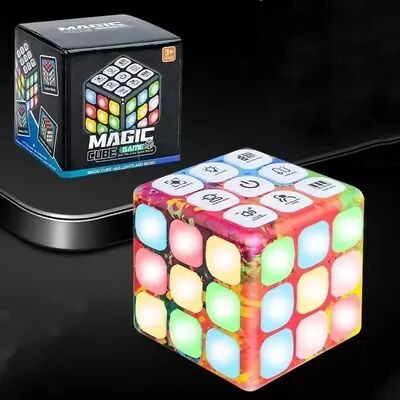
Multisell Products Hub Magnetic Flashing Cube, Kids Fun Gift, Brain Game Modes For Intelligence Development colorfulEngage Your Child's Mind with the Flashing Cube Toy The Flashing Cube Kid Intelligence Develop toy is designed to boost cognitive skills and memory while keeping kids entertained for hours. This unique game combines magnetic memory elements with a...99,97 $*Shipping: 0,00 $Secure redirect to the provider
-
JoyToys Montessori Baby Sensory Tissue Box Early Learning Toy For Fine Motor Skill Development Montessori Baby Sensory Tissue Box Early Learning Toy For Fine Motor Skill DevelopmentExperience the joy of watching your little one learn through play with this Montessori baby toy designed to spark curiosity from the very first touch. This engaging sensory tissue box encourages babies to pull, grasp, explore, and discover while...34,97 $*Shipping: 0,00 $Secure redirect to the provider



-
How can I reduce further polygons?
To reduce further polygons, you can try simplifying the geometry by removing unnecessary vertices or edges. This can be done by using tools like the simplify function in modeling software or manually editing the mesh to remove unnecessary details. Additionally, you can try using techniques like retopology to create a cleaner and more optimized mesh with fewer polygons. Finally, consider using LOD (Level of Detail) techniques to dynamically adjust the level of detail based on the distance of the object from the camera, reducing the number of polygons rendered at a given time. **
-
How can I further reduce polygons?
You can further reduce polygons by using tools such as the "Decimate" modifier in 3D modeling software, which allows you to reduce the number of polygons while preserving the overall shape of the model. Additionally, you can manually optimize the topology of the model by merging vertices, removing unnecessary edge loops, and simplifying complex geometry. Another approach is to use automated retopology tools to create a lower-polygon version of the model while maintaining its overall structure and details. **
-
How do you calculate regular polygons?
To calculate the area of a regular polygon, you can use the formula: Area = (1/2) * apothem * perimeter, where the apothem is the distance from the center of the polygon to the midpoint of any side, and the perimeter is the total length of all the sides. To calculate the interior angle of a regular polygon, you can use the formula: Interior angle = (180 * (n - 2)) / n, where n is the number of sides. Finally, to calculate the exterior angle of a regular polygon, you can use the formula: Exterior angle = 360 / n, where n is the number of sides. **
-
What are polygons in video games?
Polygons in video games are the building blocks of 3D graphics. They are flat, two-dimensional shapes that are used to create the surfaces of 3D objects in the game world. These polygons are connected to form the overall shape of the object, and then textures and lighting are applied to give them a more realistic appearance. The more polygons used, the more detailed and complex the 3D models can be, but this also requires more processing power from the computer or gaming console. **

Does a subdivision surface create more polygons?
Yes, a subdivision surface does create more polygons. When a subdivision surface is applied to a model, it increases the number of polygons by subdividing the existing geometry and creating a smoother surface. This can result in a higher level of detail and a more organic shape, but it also increases the complexity of the model and can impact performance in some cases. **
How do you calculate polygons in math?
To calculate the area of a polygon in math, you can use the formula A = 1/2 * base * height for a triangle, A = length * width for a rectangle, or A = 1/2 * apothem * perimeter for a regular polygon. For irregular polygons, you can divide the shape into smaller, simpler shapes and calculate their individual areas, then sum them up to find the total area of the polygon. Additionally, you can use trigonometric functions to calculate the area of a polygon with known side lengths and angles. **
Top-Angebote
Products related to Polygons:
-
Perfect Picks Market Geometric Building Blocks Set For Kids Early Education Intelligence Development Toy Geometric Building Blocks Set For Kids Early Education Intelligence Development ToyUnlock your child's potential with this early education equipment designed to stimulate creativity and intelligence! This geometric set is the perfect building block toy for boys, helping to develop problemsolving skills while having fun. The...35,97 $*Shipping: 0,00 $Secure redirect to the provider
-
Trendy Discount Goods Kids Bowling Cans Balls Set Educational Toy Children Sports Durable Eco Friendly Safe Intelligence Development Kids Bowling Cans Balls Set Educational Toy Children Sports Durable Eco Friendly Safe Intelligence DevelopmentPerfect for Active Play: The Bowling Cans Balls Set is an exciting way to keep your kids engaged and active while improving their coordination. This toy set is perfect for encouraging physical activity, bringing children closer to their environment,...49,97 $*Shipping: 0,00 $Secure redirect to the provider
-
JoyToys Smart Kids Learning Laptop Educational Laptop Toy For Preschool English Learning & Skill Development pinkExperience the joy of watching your child learn through play with this educational laptop toy designed to make every lesson fun and engaging. Perfect for toddlers and preschoolers, this interactive learning computer introduces letters, numbers,...34,97 $*Shipping: 0,00 $Secure redirect to the provider
-
Inspired Living Montessori Pop Up Animal Learning Box For Fine Motor & Early Skill Development Montessori Pop Up Animal Learning Box For Fine Motor & Early Skill DevelopmentTurn playtime into a joyful learning experience with this engaging Montessori toy designed to spark curiosity and build essential skills. Created for toddlers and young children, this interactive pop up animal toy combines fun surprises with...23,97 $*Shipping: 0,00 $Secure redirect to the provider
-
What are polygons?
Polygons are two-dimensional shapes that are made up of straight lines and enclosed by a set of vertices. They can have any number of sides, but must have at least three. Common examples of polygons include triangles, squares, rectangles, pentagons, hexagons, and octagons. Polygons are used in various mathematical and geometric applications, and are fundamental to understanding the properties of shapes and their relationships. **
-
What are triangles and polygons?
Triangles are three-sided polygons, while polygons are closed shapes with straight sides. Triangles are a specific type of polygon with three sides and three angles. Polygons can have any number of sides, as long as they are straight and the shape is closed. Both triangles and polygons are fundamental shapes in geometry and are used to study the properties of angles, sides, and area. **
-
How can I reduce further polygons?
To reduce further polygons, you can try simplifying the geometry by removing unnecessary vertices or edges. This can be done by using tools like the simplify function in modeling software or manually editing the mesh to remove unnecessary details. Additionally, you can try using techniques like retopology to create a cleaner and more optimized mesh with fewer polygons. Finally, consider using LOD (Level of Detail) techniques to dynamically adjust the level of detail based on the distance of the object from the camera, reducing the number of polygons rendered at a given time. **
-
How can I further reduce polygons?
You can further reduce polygons by using tools such as the "Decimate" modifier in 3D modeling software, which allows you to reduce the number of polygons while preserving the overall shape of the model. Additionally, you can manually optimize the topology of the model by merging vertices, removing unnecessary edge loops, and simplifying complex geometry. Another approach is to use automated retopology tools to create a lower-polygon version of the model while maintaining its overall structure and details. **
Similar search terms for Polygons
-
Multisell Products Hub Magnetic Flashing Cube, Kids Fun Gift, Brain Game Modes For Intelligence Development colorfulEngage Your Child's Mind with the Flashing Cube Toy The Flashing Cube Kid Intelligence Develop toy is designed to boost cognitive skills and memory while keeping kids entertained for hours. This unique game combines magnetic memory elements with a...99,97 $*Shipping: 0,00 $Secure redirect to the provider
-
JoyToys Montessori Baby Sensory Tissue Box Early Learning Toy For Fine Motor Skill Development Montessori Baby Sensory Tissue Box Early Learning Toy For Fine Motor Skill DevelopmentExperience the joy of watching your little one learn through play with this Montessori baby toy designed to spark curiosity from the very first touch. This engaging sensory tissue box encourages babies to pull, grasp, explore, and discover while...34,97 $*Shipping: 0,00 $Secure redirect to the provider
-
Youfap Market Montessori Toy Mini Children Toys, Wooden Abacus For Kids, Colorful Beads Intelligence Development Educational Toy redEnhance Learning with a Wooden Abacus for Kids Introduce your child to a world of early learning with this Wooden Abacus for Kids Colorful Beads. Perfect for preschoolers, it combines handson play with cognitive growth. Children can count, sort, and...34,97 $*Shipping: 0,00 $Secure redirect to the provider
-
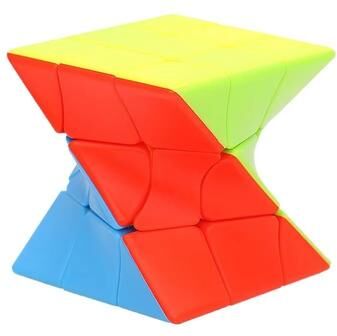
PRiME Magic Speed Cube Colorful Puzzle Toy For Kids, Brain Teaser, Intelligence Development, Fun Educational Gift twist CubeBoost Brainpower with a Fun Challenge Bring endless fun and learning to your childs playtime with this Unique 3x3x3 Magic Speed Cube Colorful Twist Puzzle. Designed for young minds and curious fingers, this toy offers an engaging way to develop...27,97 $*Shipping: 0,00 $Secure redirect to the provider
-
How do you calculate regular polygons?
To calculate the area of a regular polygon, you can use the formula: Area = (1/2) * apothem * perimeter, where the apothem is the distance from the center of the polygon to the midpoint of any side, and the perimeter is the total length of all the sides. To calculate the interior angle of a regular polygon, you can use the formula: Interior angle = (180 * (n - 2)) / n, where n is the number of sides. Finally, to calculate the exterior angle of a regular polygon, you can use the formula: Exterior angle = 360 / n, where n is the number of sides. **
-
What are polygons in video games?
Polygons in video games are the building blocks of 3D graphics. They are flat, two-dimensional shapes that are used to create the surfaces of 3D objects in the game world. These polygons are connected to form the overall shape of the object, and then textures and lighting are applied to give them a more realistic appearance. The more polygons used, the more detailed and complex the 3D models can be, but this also requires more processing power from the computer or gaming console. **
-
Does a subdivision surface create more polygons?
Yes, a subdivision surface does create more polygons. When a subdivision surface is applied to a model, it increases the number of polygons by subdividing the existing geometry and creating a smoother surface. This can result in a higher level of detail and a more organic shape, but it also increases the complexity of the model and can impact performance in some cases. **
-
How do you calculate polygons in math?
To calculate the area of a polygon in math, you can use the formula A = 1/2 * base * height for a triangle, A = length * width for a rectangle, or A = 1/2 * apothem * perimeter for a regular polygon. For irregular polygons, you can divide the shape into smaller, simpler shapes and calculate their individual areas, then sum them up to find the total area of the polygon. Additionally, you can use trigonometric functions to calculate the area of a polygon with known side lengths and angles. **
* All prices are inclusive of VAT and, if applicable, plus shipping costs. The offer information is based on the details provided by the respective shop and is updated through automated processes. Real-time updates do not occur, so deviations can occur in individual cases. ** Note: Parts of this content were created by AI.