Buy iqyp.com ?
We are moving the project
iqyp.com .
Are you interested in purchasing the domain
iqyp.com ?
domain@kv-gmbh.de · 0541-91531010
Buy iqyp.com ?
How small does an object have to be to exhibit quantum mechanical properties?
An object needs to be on the scale of atoms or subatomic particles to exhibit quantum mechanical properties. This is because at this scale, the behavior of particles is governed by quantum mechanics, which includes phenomena such as wave-particle duality, superposition, and entanglement. Larger objects, such as everyday items, do not typically exhibit these quantum properties because they are composed of a vast number of atoms and their behavior is governed by classical physics. **
Does an object have potential energy when it is on the ground?
Yes, an object can have potential energy even when it is on the ground. Potential energy is the energy that an object possesses due to its position or state. For example, a book on a table has potential energy because it has the potential to fall to the ground. So, even when an object is on the ground, it can still have potential energy depending on its position relative to other objects or forces. **
Similar search terms for Object
Top-Angebote
Products related to Object:
-
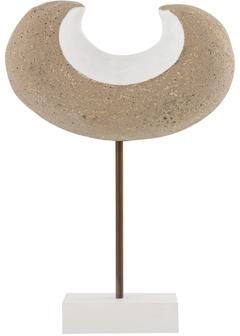
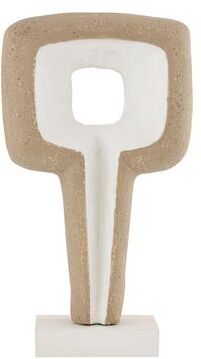
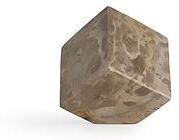
Sagebrook Home Abstract Iron Decorative ObjectEnhance your home decor with our stunning line of Decorative Accessories. Our decorative accents will inspire your creativity while designing your home and outdoor spaces. A great addition and decoration for upscale hotels and offices.46,49 $*Shipping: 0,00 $Secure redirect to the provider

-
What is the difference between prepositional object and object?
The main difference between a prepositional object and an object is their relationship to the verb in a sentence. An object is a noun or pronoun that directly receives the action of the verb, while a prepositional object is the noun or pronoun that comes after a preposition and is related to the verb indirectly. In other words, an object is directly affected by the verb, while a prepositional object is connected to the verb through a preposition. **
-
How can one build a flying object in project-based learning?
To build a flying object in project-based learning, one can start by researching different types of flying objects such as kites, paper airplanes, or drones. Next, students can design their flying object by considering factors like aerodynamics, weight distribution, and materials. They can then build a prototype using materials like paper, cardboard, or lightweight plastics. Finally, students can test their flying object, make adjustments as needed, and present their findings to their peers. **
-
'Substance or object?'
A substance is a type of matter that has a specific composition and properties, such as water or salt. An object, on the other hand, is a tangible item that can be seen and touched, such as a book or a chair. While substances are the fundamental building blocks of matter, objects are made up of one or more substances and have a distinct shape and form. **
-
What is the difference between object constancy and object permanence?
Object constancy refers to the ability to maintain a consistent emotional bond with a person despite changes in the environment or temporary absences. It involves understanding that people can still care for you even when they are not physically present. On the other hand, object permanence is the understanding that objects continue to exist even when they are out of sight. It is a cognitive milestone typically achieved in infancy, whereas object constancy is a more complex emotional concept that develops later in childhood. **
What is the difference between direct object and indirect object?
A direct object is a noun or pronoun that receives the action of the verb directly, while an indirect object is a noun or pronoun that receives the direct object. In other words, the direct object is the recipient of the action, while the indirect object is the recipient of the direct object. For example, in the sentence "She gave him a book," "book" is the direct object receiving the action of "gave," and "him" is the indirect object receiving the book. **
What are examples of how an object becomes another object?
One example of how an object becomes another object is through the process of recycling. For instance, plastic bottles can be recycled and transformed into new plastic products. Another example is when raw materials such as wood, metal, or glass are used to create new objects such as furniture, machinery, or containers. Additionally, objects can be repurposed or upcycled, such as turning an old tire into a swing or a used jar into a candle holder. **
Top-Angebote
Products related to Object:
-
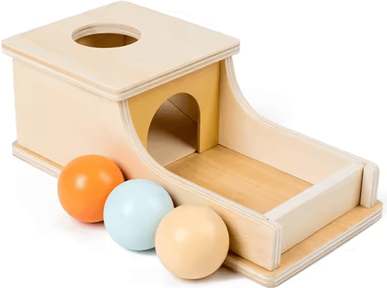
Inspire Curations Montessori Wooden Ball Drop Box Educational Toy Object Permanence Learning Game For Toddlers Montessori Wooden Ball Drop Box Educational Toy Object Permanence Learning Game For ToddlersTurn playtime into meaningful learning with a toy designed to grow young minds. This Montessori wooden ball drop box helps children discover cause and effect as they drop the ball and watch it reappearbuilding curiosity and confidence with every...105,50 $*Shipping: 0,00 $Secure redirect to the provider
-
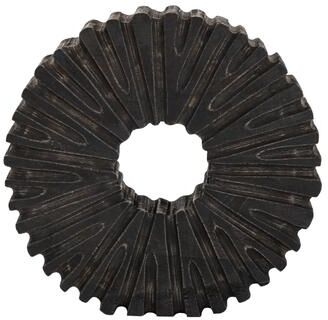
Elk Home Aston Decorative ObjectThe Aston Tabletop Sculpture is a round decorative object designed to sit upright on a bookshelf or credenza. Featuring a ring of black painted mango wood carved in a sunburst pattern, this sculpture makes a dramatic statement.114,00 $*Shipping: 0,00 $Secure redirect to the provider
-
How small does an object have to be to exhibit quantum mechanical properties?
An object needs to be on the scale of atoms or subatomic particles to exhibit quantum mechanical properties. This is because at this scale, the behavior of particles is governed by quantum mechanics, which includes phenomena such as wave-particle duality, superposition, and entanglement. Larger objects, such as everyday items, do not typically exhibit these quantum properties because they are composed of a vast number of atoms and their behavior is governed by classical physics. **
-
Does an object have potential energy when it is on the ground?
Yes, an object can have potential energy even when it is on the ground. Potential energy is the energy that an object possesses due to its position or state. For example, a book on a table has potential energy because it has the potential to fall to the ground. So, even when an object is on the ground, it can still have potential energy depending on its position relative to other objects or forces. **
-
What is the difference between prepositional object and object?
The main difference between a prepositional object and an object is their relationship to the verb in a sentence. An object is a noun or pronoun that directly receives the action of the verb, while a prepositional object is the noun or pronoun that comes after a preposition and is related to the verb indirectly. In other words, an object is directly affected by the verb, while a prepositional object is connected to the verb through a preposition. **
-
How can one build a flying object in project-based learning?
To build a flying object in project-based learning, one can start by researching different types of flying objects such as kites, paper airplanes, or drones. Next, students can design their flying object by considering factors like aerodynamics, weight distribution, and materials. They can then build a prototype using materials like paper, cardboard, or lightweight plastics. Finally, students can test their flying object, make adjustments as needed, and present their findings to their peers. **
Similar search terms for Object
-
Sagebrook Home Abstract Iron Decorative ObjectEnhance your home decor with our stunning line of Decorative Accessories. Our decorative accents will inspire your creativity while designing your home and outdoor spaces. A great addition and decoration for upscale hotels and offices.46,49 $*Shipping: 0,00 $Secure redirect to the provider
-
'Substance or object?'
A substance is a type of matter that has a specific composition and properties, such as water or salt. An object, on the other hand, is a tangible item that can be seen and touched, such as a book or a chair. While substances are the fundamental building blocks of matter, objects are made up of one or more substances and have a distinct shape and form. **
-
What is the difference between object constancy and object permanence?
Object constancy refers to the ability to maintain a consistent emotional bond with a person despite changes in the environment or temporary absences. It involves understanding that people can still care for you even when they are not physically present. On the other hand, object permanence is the understanding that objects continue to exist even when they are out of sight. It is a cognitive milestone typically achieved in infancy, whereas object constancy is a more complex emotional concept that develops later in childhood. **
-
What is the difference between direct object and indirect object?
A direct object is a noun or pronoun that receives the action of the verb directly, while an indirect object is a noun or pronoun that receives the direct object. In other words, the direct object is the recipient of the action, while the indirect object is the recipient of the direct object. For example, in the sentence "She gave him a book," "book" is the direct object receiving the action of "gave," and "him" is the indirect object receiving the book. **
-
What are examples of how an object becomes another object?
One example of how an object becomes another object is through the process of recycling. For instance, plastic bottles can be recycled and transformed into new plastic products. Another example is when raw materials such as wood, metal, or glass are used to create new objects such as furniture, machinery, or containers. Additionally, objects can be repurposed or upcycled, such as turning an old tire into a swing or a used jar into a candle holder. **
* All prices are inclusive of VAT and, if applicable, plus shipping costs. The offer information is based on the details provided by the respective shop and is updated through automated processes. Real-time updates do not occur, so deviations can occur in individual cases. ** Note: Parts of this content were created by AI.